
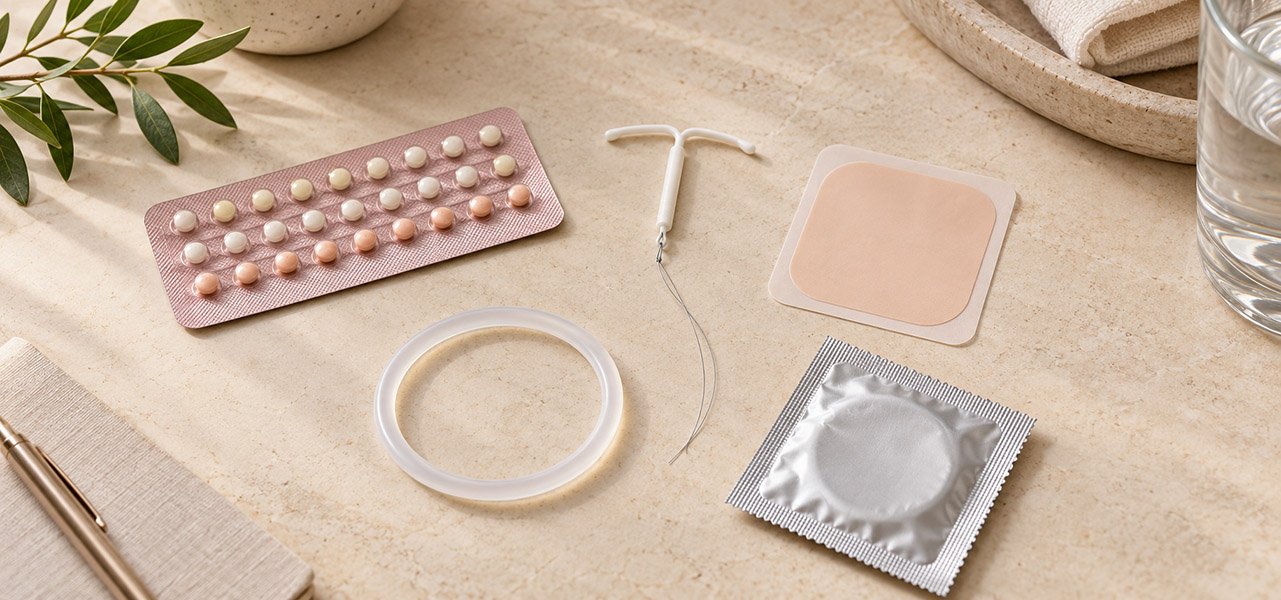
Hormonal Contraception: Everything You Need to Know
Athanasia Despotidi, MD, MSc
Obstetrician & Gynecologist
Specialist in Assisted Reproduction
Contraception allows you to decide whether and when you would like to have a child. Today, there are many safe and effective options available. The most suitable method is the one that best fits your health, lifestyle, and individual needs.
Hormonal contraception is one of the most widely used forms of birth control. It provides effective protection against unintended pregnancy and, in some cases, offers additional health benefits.
How Does Hormonal Contraception Work?
Hormonal contraceptive methods contain synthetic hormones that act similarly to the body's natural estrogen and progesterone.
Depending on the method, they prevent pregnancy through one or more of the following mechanisms:
- Preventing ovulation, so that an egg is not released from the ovaries.
- Thickening cervical mucus, making it more difficult for sperm to pass through the cervix.
- Changing the uterine lining (endometrium), which becomes thinner with certain methods.
The exact mechanism of action varies depending on the contraceptive method.
What Hormonal Contraceptive Methods Are Available?
Long-Acting Contraceptive Methods
Long-acting reversible contraceptives are among the most effective birth control options because they do not require daily administration or regular reminders.
Hormonal Intrauterine System (IUS)
A small device is inserted into the uterus by a trained healthcare professional. It gradually releases levonorgestrel and provides contraceptive protection for several years, depending on the specific device.
Contraceptive Implant
A small, flexible rod is inserted beneath the skin of the upper arm. It releases a progestogen and provides long-term contraception. The duration of protection depends on the specific product and its approved period of use.
Both methods are more than 99% effective at preventing pregnancy. They can be removed whenever a woman wishes to discontinue contraception, and fertility usually returns rapidly after removal.
Methods That Require Regular Use
Contraceptive Pill
The pill is taken daily. There are two main types: combined oral contraceptives, which contain estrogen and a progestogen, and progestogen-only pills.
Vaginal Ring
The vaginal ring is placed inside the vagina, where it releases contraceptive hormones. A common regimen involves using the ring for three weeks, followed by a one-week break, although instructions vary depending on the product.
Contraceptive Patch
The patch is applied to the skin and is usually replaced weekly according to the prescribed schedule.
Contraceptive Injection
Injectable contraception contains a progestogen and is administered at regular intervals, commonly approximately every three months.
These methods are highly effective when used correctly. However, missing a pill or delaying a scheduled injection may reduce their effectiveness in everyday use.
What Are the Additional Benefits of Hormonal Contraception?
In addition to preventing pregnancy, certain hormonal contraceptive methods can offer important benefits for gynecological health.
Depending on the method, they may help:
- Reduce menstrual pain (dysmenorrhea).
- Decrease heavy menstrual bleeding.
- Improve acne.
- Relieve symptoms associated with endometriosis.
- Make menstrual bleeding more predictable.
Furthermore, the use of combined oral contraceptive pills has been associated with a reduced risk of endometrial and ovarian cancer.
Not all hormonal contraceptive methods provide the same additional benefits. The choice should be individualized according to each woman's needs and medical history.
What Are the Possible Side Effects?
As with any medication, hormonal contraception may cause side effects.
The most common include:
- Nausea or breast tenderness.
- Headaches.
- Mood changes.
- Irregular bleeding or spotting.
- Lighter periods or absence of menstruation (amenorrhea).
Many of these symptoms occur during the first few months of use and may improve over time.
Irregular bleeding or the absence of periods is common with certain progestogen-only methods and does not usually indicate a medical problem. However, heavy, persistent, or unusual bleeding should be assessed by a healthcare professional.
When Is Extra Caution Needed?
Combined hormonal contraceptives containing estrogen — including certain contraceptive pills, vaginal rings, and patches — are associated with an increased risk of venous thromboembolism (blood clots).
Although the absolute risk remains low for most healthy women of reproductive age, careful medical assessment is particularly important in certain situations.
You should inform your gynecologist if you:
- Smoke and are aged 35 or older.
- Have high blood pressure.
- Have a history of blood clots or a known thrombophilia.
- Experience migraine with aura.
- Have recently given birth.
- Have other medical conditions or take medications that may affect contraceptive safety.
In many of these circumstances, alternatives that do not contain estrogen may be considered, including certain progestogen-only or non-hormonal contraceptive methods.
However, the suitability of each option must be assessed individually. Some progestogen-only methods can also be used during breastfeeding, depending on the time since childbirth and the woman's medical history.
When Should You Seek Urgent Medical Attention?
If you are using hormonal contraception, seek immediate medical attention if you develop any of the following symptoms:
- Severe pain or swelling in one leg.
- Sudden chest pain.
- Sudden shortness of breath.
- A sudden, unusually severe headache.
- Sudden changes in vision or speech.
These symptoms may indicate a serious medical condition and should not be ignored.
What Should You Know Before Starting Hormonal Contraception?
Protection Against Sexually Transmitted Infections
Hormonal contraceptive methods do not protect against sexually transmitted infections (STIs). Condoms help reduce the risk of STI transmission and can be used alongside another contraceptive method for additional protection.
When Does Contraceptive Protection Begin?
Many hormonal contraceptive methods can be started at different points during the menstrual cycle, provided that pregnancy can be reasonably excluded.
However, whether additional protection — such as condoms — is required, and for how long, depends on the method, the specific product, and the timing of initiation. It is therefore important to follow individualized medical advice.
Does Hormonal Contraception Affect Future Fertility?
Most reversible hormonal contraceptive methods do not cause permanent infertility. After discontinuation, fertility usually returns relatively quickly.
An exception regarding the timing of fertility return may be injectable contraception containing depot medroxyprogesterone acetate (DMPA), after which ovulation may take several months to resume.
Which Contraceptive Method Is Right for You?
There is no single contraceptive method that is ideal for every woman.
The most appropriate choice depends on several factors, including: • Your age and medical history. • Your lifestyle and personal preferences. • Any existing medical conditions or contraindications. • Your plans for future pregnancy. • The convenience and ease of use of each method.
Individualized contraceptive counseling helps identify an option that combines effectiveness, safety, and convenience.
The right contraception is the method that suits you, your health, and your needs — both now and in the future.
This article is intended for informational purposes only and does not replace individualized medical advice.